Cookies Privacy
I accept Cookies Policy We use cookies to understand how you use our website and to improve your experience. By continuing to use this website, you accept our Link is copied!

Red-Team Assessments

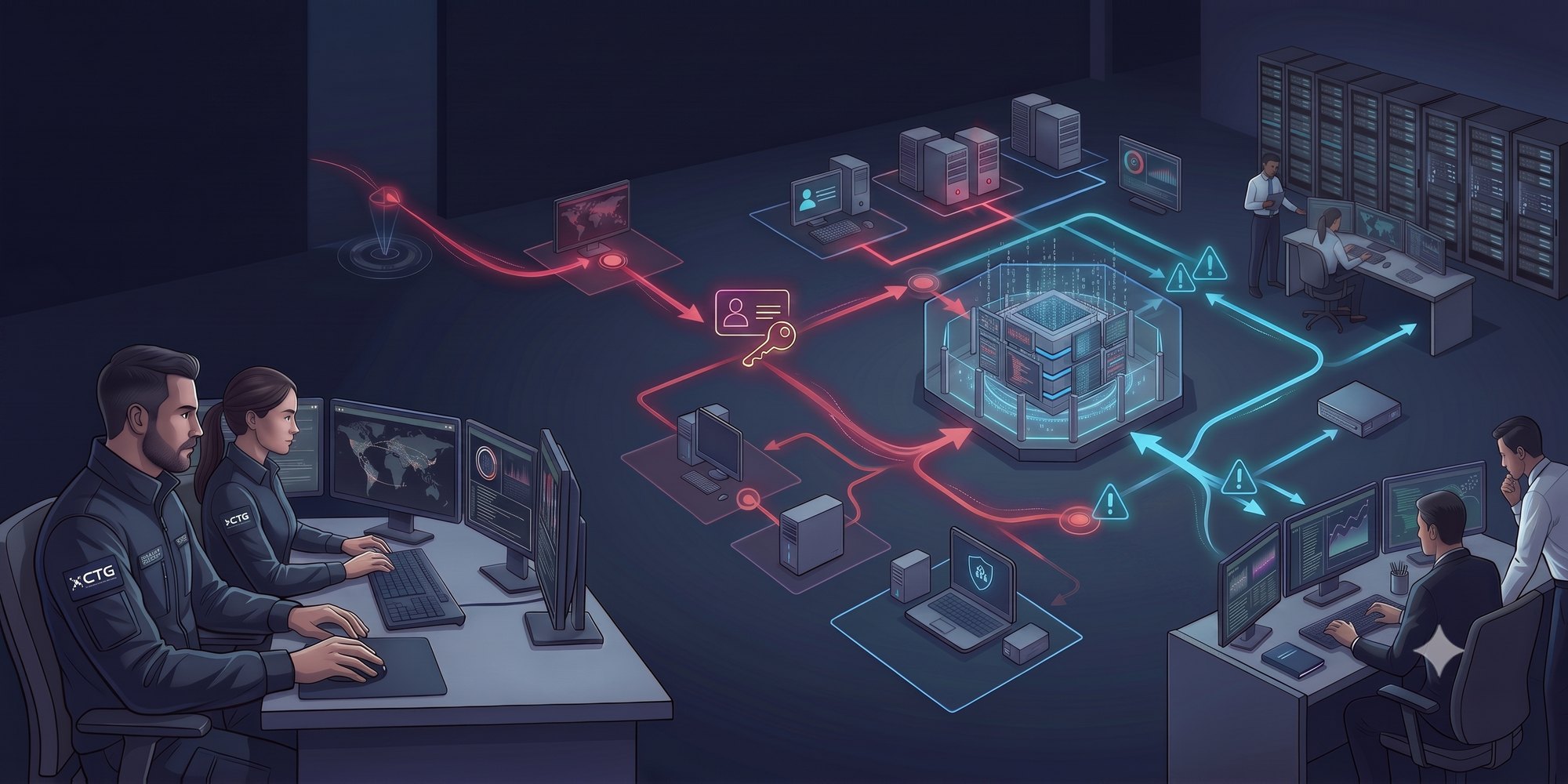
A red-team assessment tests whether an organisation can prevent, detect and respond to a realistic multi-stage intrusion against defined business objectives. It is intended for mature organisations that already operate foundational controls and want to test integrated defensive performance rather than isolated vulnerabilities.

The decisions this service informs

The purpose is to validate realistic attack paths safely and convert technical weaknesses into remediation priorities.

  • Test the complete path from initial access to an agreed objective.
  • Measure detection, investigation and escalation across teams.
  • Identify control gaps that only appear when techniques are chained.
  • Improve collaboration between offensive, defensive and business stakeholders.
  • Create a practical set of detection, response and resilience improvements.

What CTG assesses and delivers?

The final scope is agreed before work begins. Depending on the objective, environment and authorised access, the engagement may cover:

  • Threat-informed objectives and target assets.
  • External, application, identity and internal attack paths.
  • Email, telephone or physical pretexts when explicitly authorised.
  • Command-and-control and persistence techniques within safety limits.
  • Privilege escalation and lateral movement.
  • Defensive detection, triage and escalation performance.
  • Purple-team collaboration where appropriate.
  • Executive and technical debriefing.

How we run the engagement?

Agree target outcomes, threat model, scope, deconfliction, stop conditions and legal authority.

1. Define objectives and safeguards:

Select realistic techniques, infrastructure, pretexts and success criteria.

2. Develop the operation plan:

Operate discreetly while protecting production stability and sensitive data.

3. Execute in controlled phases:

Record what was prevented, detected, investigated, escalated or missed.

4. Measure defensive response:

Reconstruct the operation, prioritise gaps and convert findings into detection and response actions.

5. Debrief and improve:

What we hand over?

Deliverables are written for decision-makers and the teams responsible for implementation. Depending on scope, they may include:

  • Red-team operation plan and rules of engagement.
  • Executive attack narrative and objective status.
  • Technique timeline mapped to observed defensive response.
  • Evidence of control and detection gaps.
  • Detection and response improvement backlog.
  • Purple-team replay plan where included.
  • Management and technical debriefs.

How we protect quality and safety?

Testing is governed by written authorisation, explicit exclusions, safety limits and emergency contacts. Material findings are manually validated, supported with reproducible evidence and explained in terms of realistic impact rather than scanner severity alone.

When to use this service?

  • The organisation has mature testing and monitoring but needs integrated validation.
  • A board wants evidence of resilience against a plausible threat.
  • SOC and incident processes need realistic exercise.
  • Major identity, cloud or network controls have changed.
  • The organisation wants to test crown-jewel protection.
  • Previous assessments found vulnerabilities but not end-to-end defensive performance.

Standards, timelines and limits

The engagement may draw on MITRE ATT&CK, red-team rules-of-engagement practice, relevant threat intelligence and customer control frameworks. A framework reference explains how the work is organised; it does not by itself represent certification, accreditation or a regulatory decision.


The schedule is confirmed after scoping and depends on the environment, evidence available and stakeholder access.


Red teaming carries higher operational and reputational risk than a standard penetration test. It requires explicit executive sponsorship, legal authority, deconfliction, stop conditions and agreement on sensitive techniques. It cannot guarantee that every real attacker would be detected or blocked.

Discuss Red-Team Assessments with CTG. A focused scoping session will confirm the objective, boundaries, evidence, delivery model and expected outputs before a proposal is issued.

Related services

Frequently asked questions

What does Red-Team Assessments cover?

The final scope is agreed before work begins. Typical areas include threat-informed objectives and target assets, External, application, identity and internal attack paths, Email, telephone or physical pretexts when explicitly authorised, and Command-and-control and persistence techniques within safety limits. The proposal records exclusions, required access, customer responsibilities and acceptance criteria.

What will we receive at the end of the engagement?

Deliverables depend on the agreed objective and may include red-team operation plan and rules of engagement, Executive attack narrative and objective status, Technique timeline mapped to observed defensive response, and Evidence of control and detection gaps. Material conclusions are linked to supporting evidence, impact, priority and accountable next steps.

Could testing disrupt production systems?

Authorised testing can create risk if it is poorly controlled. CTG agrees testing windows, prohibited techniques, stop conditions and emergency contacts before work begins, and uses higher-risk techniques only with explicit approval.

Is remediation retesting included?

Retesting can be included in the initial scope or ordered after remediation. It validates the previously confirmed findings and closely related bypass conditions; it is not automatically a complete new assessment.

How long does the engagement take?

The schedule is confirmed after scoping and depends on the environment, evidence available and stakeholder access.

How does this relate to External and Internal Penetration Testing?

The services answer connected but different questions. Scoping identifies whether Red-Team Assessments, External and Internal Penetration Testing, or a coordinated programme is the smallest useful approach without duplicating work.

What are the principal limitations?

Red teaming carries higher operational and reputational risk than a standard penetration test. It requires explicit executive sponsorship, legal authority, deconfliction, stop conditions and agreement on sensitive techniques. It cannot guarantee that every real attacker would be detected or blocked.